
Unfortunately, there is no single permit checklist that applies to every San Francisco event. Permitting requirements for different activities can fall under different agencies, and responsibility may sit with the venue, caterer, beverage provider, production company, or event organizer. The safest approach is to define the program early, confirm what the venue already covers, assign responsibility for anything that remains, and build permitting into the production timeline before plans are locked. It can also be invaluable to work with a partner who is well-versed in permitting and compliance and knows how to navigate the often complicated processes that come with more complex events.
A venue can be fully permitted to host events and your event can still need additional approvals.
That is where permitting can catch planners off guard. The property itself may be approved for regular event use, but the specifics of your program can introduce requirements that fall outside those existing permits. Outdoor sound, temporary structures, certain production elements, alcohol service, food service, or a change in how part of the property is being used can all affect what needs to happen next.
At that point, the question is no longer simply, “Is the venue permitted?” It becomes: What does this particular event require? Which agency handles it? And who on the event team is responsible for getting it done?
San Francisco events can touch several City and state agencies depending on what is actually happening on site. Entertainment and amplified sound can involve the Entertainment Commission. Alcohol falls under California ABC. Certain food-service situations can bring in the Department of Public Health. Tents, flame effects, assembly conditions, generators, and other production elements may involve the Fire Department. Move onto a park, street, plaza, Port property, or another public site and the picture can change again.
That does not mean every company dinner or private reception requires a stack of temporary permits.
The best place to start answering those permitting questions is with the venue.
Start With What the Venue Already Covers
Two venues that can host the same number of guests may have very different permitting profiles.
There is no standard bundle of permits that every San Francisco event venue holds. What is already in place depends on how the property is approved to operate, the activities it regularly hosts, whether food or alcohol is served there, and which portions of the property are included in those approvals.
A few of the more common permits and licenses worth understanding include:
- Place of Assembly Permit: San Francisco Fire Department reviews assembly occupancies, including restaurants and other gathering places for 50 or more people. A permanent Place of Assembly permit is tied to an approved floor plan and occupant load, which helps establish how the building can be used from a fire and life-safety standpoint.
- Place of Entertainment Permit: A venue where entertainment is an ongoing and primary use may hold a Place of Entertainment, or POE, permit through the San Francisco Entertainment Commission. This can cover live performances including musicians, bands, DJs, theater, dance, comedy, karaoke, and other forms of entertainment. The City also offers more limited permanent permits, including a Limited Live Performance Permit for businesses where entertainment is secondary to the main use and a Fixed Place Amplified Sound Permit for certain ongoing outdoor amplified sound.
- Alcohol License: Alcohol is regulated separately through the California Department of Alcoholic Beverage Control. ABC does not issue a special license category simply for “event venues” or banquet halls. A property may instead operate under an applicable permanent on-sale license, such as a Type 41, 42, 47, or 48, depending on how the business operates. Other venues may rely on a licensed beverage provider using a Caterer’s Permit and event-specific authorization.
- Food (Health) Permit to Operate: Properties that operate permanent food facilities may also hold a health Permit to Operate through the San Francisco Department of Public Health. A venue without its own permitted kitchen or food operation may instead work with licensed caterers, which creates a different operating model and can shift some responsibilities away from the venue itself.
That is why the question is not as simple as whether a venue is “permitted.”
One property might already have an approved assembly use, regular entertainment privileges, and a permanent alcohol operation. Another may be approved to host gatherings but rely on temporary entertainment permits and outside licensed food and beverage providers. Both can function successfully as event venues, but the path to producing the same program in each building may be very different.
The scope of those approvals matters as well. A permit that covers entertainment inside a building does not necessarily mean every courtyard, rooftop, sidewalk, or adjacent outdoor area can be used the same way. Occupant loads, operating hours, outdoor sound, and other conditions can also differ by property.
Understanding that baseline early gives planners a much clearer picture of what the venue can already support and where event-specific permitting may still be required.
This is also something worth understanding before the contract is signed. Our article on 7 Must-Ask Questions Before Booking an Event Venue covers some of the other operational details that can affect what happens after a venue is selected.
When Your Event Goes Beyond the Venue’s Existing Permits
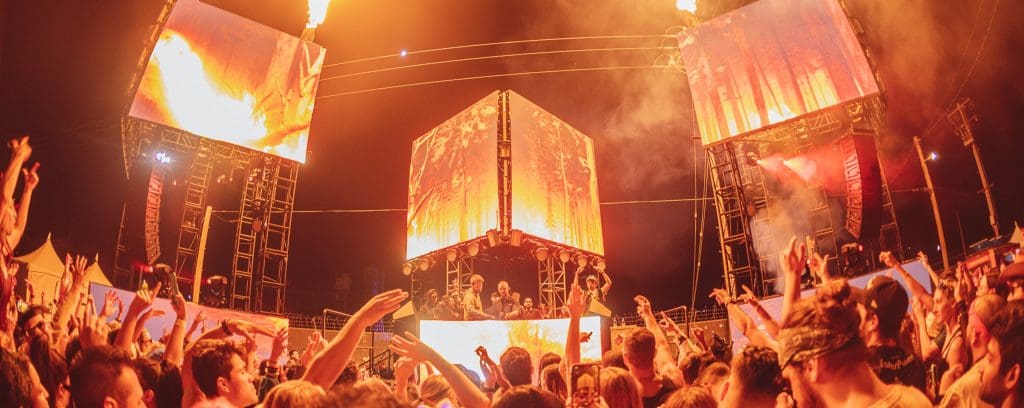 A venue’s permanent permits establish a baseline. They do not necessarily cover every activity you might add to an event.
This is where event-specific permitting starts to matter.
Entertainment is one example. A ballroom may already be covered by the venue’s Place of Entertainment permit, while a DJ or amplified sound added to an outdoor courtyard may require separate approval. San Francisco distinguishes between One Time Outdoor Event Permits, which can cover outdoor entertainment and amplified sound, and One Time Outdoor Amplified Sound Permits for certain situations where amplified sound is being used without entertainment.
Production can introduce a different set of requirements.
The San Francisco Fire Department maintains separate permit and review processes for a number of activities that commonly appear in larger event builds. Depending on the plan, those can include:
- Temporary or Special Places of Assembly: This may come into play when an event is using a space in a way that differs from its normal approved configuration, such as converting a large industrial floor into a temporary seated dinner, conference, or performance area.
- Tents and membrane structures: These can become relevant when an event adds a covered outdoor component, whether for weather protection, additional dining or hospitality space, or an extension of the main program into a courtyard or other exterior area.
- Open flames and candles in assembly areas: This isn’t just for fire dancers. Something as simple as incorporating real candles into table décor, adding fire-based catering equipment, or using decorative flame elements can introduce additional review.
- Flame effects, fireworks, and other pyrotechnic special effects: A product reveal, concert moment, or opening sequence that uses sparks, flame, or another pyrotechnic effect may require its own plans, safety documentation, and approval.
- Outdoor assembly events and certain regulated equipment or fuel uses: Large outdoor gatherings, temporary generators, propane, or other fuel-powered equipment can introduce additional Fire Department requirements depending on how they are being used.
Even changes to the existing venue floor plan can matter. SFFD’s requirements for a Temporary or Special Place of Assembly include a dimensioned plan showing elements such as exits, how different areas will be used, seating arrangements, and the proposed occupant load. A production decision that changes or impedes those conditions, for example, may involve more than simply updating the event diagram.
None of this is to say you need to scale back the idea.
In many cases, the big creative swing is still very much on the table. It may just come with a little more lift behind the scenes: another permit, a revised plan, an inspection, or a few more conversations between the venue, production team, and City.
The earlier you know what that lift looks like, the more room you have to solve for it without losing what made the idea exciting in the first place. That is a much better position to be in than discovering the problem when the trucks are at the dock and the clock is already running.
Alcohol Service Has Its Own Permitting Track

An entertainment permit does not automatically cover alcohol service.
That side of the event is regulated through the California Department of Alcoholic Beverage Control, and the exact process depends on the venue, the alcohol provider, and the license being used.
For catered alcohol service, certain licensees with a Type 58 Caterer’s Permit must receive ABC authorization for each catered event. ABC may also require things like property-owner approval, law-enforcement approval, operating conditions, or a diagram showing the licensed event area.
Qualified nonprofit organizations have a separate temporary-license path for eligible events.
For planners, there is a simpler question to ask first:
Who is actually responsible for the alcohol license at this event?
At a venue with beverage service managed in-house (like all of the venues in NPU’s portfolio), the client may have very little direct involvement with ABC. If an outside provider is being brought into another property, the responsibilities may look different.
Find that out early.
“Alcohol is allowed” and “the alcohol service for this specific event is properly covered” are not necessarily the same thing.
Food Service Can Bring Additional Health Requirements
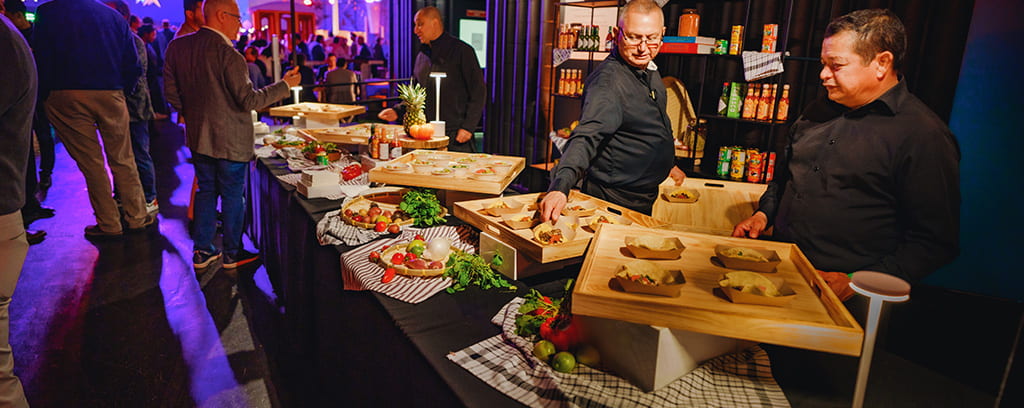
Hiring a licensed caterer does not always end the permitting conversation around food.
For certain temporary and public events, San Francisco’s Department of Public Health has a Temporary Events Program covering food and beverage vendors. Its current sponsor application calls for vendor information, site plans, and Temporary Food Facility applications where applicable. It also warns that applications submitted less than 14 days before the event can incur additional fees, while food and beverage vendors will not be permitted when applications arrive seven days or less before the event.
That does not mean the same process applies to every private corporate dinner inside an established venue.
The format matters. The location matters. How and where food is being prepared matters.
The larger takeaway is that the venue, caterer, and event team should establish who owns any required health documentation instead of assuming someone else has already handled it.
Events on Public Property Can Require Additional Permits
A private venue and a public park may host similar events, but they are not necessarily traveling through the same approval process.
San Francisco Recreation and Parks, for example, requires special-event applications for the use of its parks, plazas, and squares. Its current process requires applications at least 60 days before the event, and events with 1,000 or more attendees must also complete an ADA Public Event checklist.
Other public sites can come with their own property approvals. Treasure Island, for example, issues use permits for special events while still requiring organizers to comply with other applicable City and state requirements.
Street closures can add another agency. Port property can add another relationship and another set of operating conditions.
This is why “we did something similar last year” only gets you so far when the new event is happening somewhere else.
Changing the location can change the process entirely.
A Quick Starting Point for San Francisco Event Permits
While there is no universal checklist, these are some of the areas worth investigating early on based on the event you are planning:
| If your event includes… | You may need to investigate… |
|---|---|
| A DJ, band, or other live entertainment | Entertainment Commission requirements and the venue’s existing entertainment permits |
| Outdoor entertainment or amplified sound | One-time outdoor entertainment or amplified-sound requirements |
| Alcohol service | California ABC licensing or event-specific authorization |
| Temporary public food service | SF Department of Public Health temporary-event requirements |
| Tents or temporary membrane structures | San Francisco Fire Department permits and review |
| Candles, flame effects, pyrotechnics, propane, or certain cooking equipment | San Francisco Fire Department requirements |
| Generators or regulated fuel use | Applicable Fire Department permits |
| Temporary or unusual assembly conditions | Fire Department and potentially other building or occupancy review |
| Use of a park, plaza, street, Port site, or other public property | The agency controlling that property plus other applicable event approvals |
The important phrase here is may need.
The venue, its existing approvals, the activities taking place, and the way the event is being produced all affect the final answer. Use this as a starting point for the conversation rather than a definitive permit checklist.
This list is just the beginning, too. Permitting and compliance can quickly become a daunting task for even the most seasoned event planners. Sometimes, it is simply easier to bring in people who deal with these requirements every day.
The Right Partner Can Make the Compliance Process Much Easier
Once several permits, agencies, vendors, and deadlines are involved, the challenge is no longer just filling out applications. It is keeping all of those pieces moving together.
A change to the floor plan can affect a Fire Department review. Production may need to adjust a build based on permit conditions. One agency may request new documentation that then needs to make its way back through the venue and vendor teams.
This is where experience becomes valuable.
A partner who works with permitting and compliance regularly can help coordinate those moving parts, keep responsibilities clear, stay ahead of deadlines, and make sure a change in one area does not create a problem somewhere else.
They can also help bridge the gap between the different people involved. Creative is focused on the experience. Production is focused on how to build it. City reviewers are focused on safety and compliance. The planner is trying to keep everything on schedule and on budget.
That kind of coordination is a core part of NPU’s role. Our team regularly helps clients navigate permitting and compliance across our venues, working with City agencies, production partners, caterers, beverage teams, and other vendors to keep the different requirements moving in the same direction. For more complex events, we can take on much of that coordination directly so planners are not left trying to manage every permit and approval on their own.
We saw that play out during Dreame’s large international product showcase at the Palace of Fine Arts. Permitting, compliance, traffic planning, safety requirements, venue logistics, and a complicated production build all had to move together. NPU served as the operational hub between the client, vendors, venue, and local requirements throughout the process.
Not every event needs that level of support. For the ones that do, having someone who already understands the permitting and compliance landscape can make a complicated process far easier to manage and give you more room to focus on what will actually make the event great.
TL;DR: What You Need to Know About Event Permitting in San Francisco
There is no one-size-fits-all permitting process for events in San Francisco. What you need depends on the venue, the approvals it already holds, where the event is taking place, and what you are asking the space to support.
The key is understanding how those pieces fit together before they become obstacles. Some requirements may be simple. Others may involve additional applications, revised plans, inspections, agency coordination, or a little more time behind the scenes.
That does not mean the event needs to become less ambitious. It means the path to executing it needs to account for the rules that come with the idea.
This is also where the right venue partner can make a real difference.
At NPU, permitting and compliance are part of the operational support we provide across our San Francisco venues. Our team works with planners, vendors, production partners, and local agencies to help navigate the requirements tied to both the property and the event.
Good permitting support can take a complicated process and make it far more manageable. When the approvals, agency coordination, and follow-up are in capable hands, the event team has more room to stay focused on the experience they are trying to create.
Planning an event with permitting or compliance questions? Connect with the NPU team to learn how we can help navigate the requirements for your event.
Still looking for the right space? Explore our venue selector to find an NPU venue that fits your plans.
Permit requirements, fees, timelines, and agency procedures can change. Always confirm current requirements with the applicable agency and venue for your specific event.
Frequently Asked Questions About Event Permits in San Francisco
Do I need a permit for a private event in San Francisco?
Not every private event requires a new temporary City event permit. What is required depends on the property and what the event includes. An event taking place inside an established venue may already be covered by many of the property’s existing approvals, while outdoor entertainment, temporary structures, flame effects, or other regulated activities can introduce additional requirements.
Do I need a permit for a DJ or live music in San Francisco?
Potentially. San Francisco regulates many forms of live entertainment through the Entertainment Commission. Whether an additional permit is needed depends on the venue’s existing approvals, where the performance takes place, the type of entertainment, and whether outdoor entertainment or amplified sound is involved.
Do I need a permit to serve alcohol at an event in San Francisco?
Alcohol is regulated separately from entertainment. Depending on the venue and beverage provider, a licensed caterer may need event-specific authorization through California ABC. Qualified nonprofit organizations also have temporary licensing options for eligible events.
Do I need a permit for a tent at an event in San Francisco?
It depends on the structure. Current SFFD guidance specifically addresses temporary tents and membrane structures larger than 400 square feet, with required documentation depending on the installation.
How early should I start event permitting in San Francisco?
Start identifying potential requirements once the major elements of the event are known. Individual agencies have their own filing windows, but those minimum deadlines are not necessarily good planning targets. Events involving several agencies, outdoor areas, temporary structures, public property, special effects, or complex production should begin the permitting conversation much earlier.
Do event venues handle event permits, or does the planner?
It depends on the approval process and the venue partner. Some permits may be handled by the venue, while others belong to a beverage provider, caterer, production vendor, or event organizer. The important step is assigning responsibility early and making sure everyone involved understands who owns each approval.
Can an experienced venue partner help with event permitting?
Yes. A venue partner familiar with local permitting and compliance can help determine how the venue’s existing approvals apply to the event, coordinate with vendors and agencies, track requirements and deadlines, and navigate changes when several approvals are involved. This can be particularly valuable for large or highly produced events where permitting is closely tied to the floor plan, entertainment, temporary infrastructure, food and beverage, or other operational decisions.