
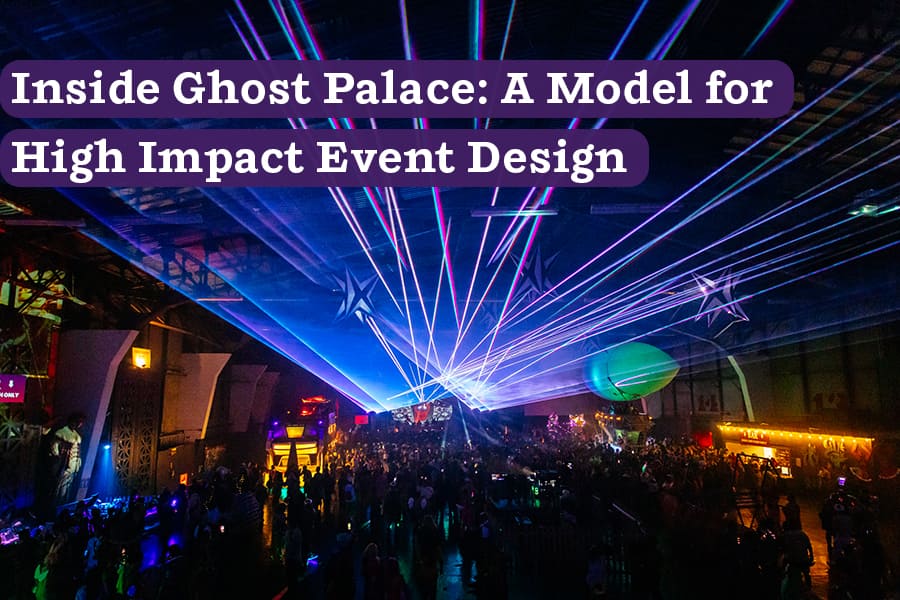
Ghost Palace has become a major Halloween event tradition in San Francisco. Each year, it fills all 140,000 square feet of the Palace of Fine Arts with music, art, interactive zones, and more. It also proves how thoughtful design and strong planning can turn a large space into a full story.
Now in its fourth year, Ghost Palace continues to stand out as one of the most ambitious productions in the city. Each October, Ghost Ship Halloween, Electroluxx, and Non Plus Ultra build the entire experience from the ground up, carefully shaping every space with its own mix of sound, art, and live performance. The result is a one-night event packed to the rafters with creative work at a scale that is second to none.
Building an event this intricate and at this scale takes meticulous planning. Every element has to earn its place, draw guests in, and fit together in a way that lets guests move naturally through the venue. Let’s take a deeper dive into Ghost Palace to see exactly what makes it such a successful annual event.
What is Ghost Palace?
–
Ghost Palace turns the Palace of Fine Arts into a maze of active spaces. Last year, more than 5,000 guests moved through eleven music zones featuring multiple DJs, drag shows and live acts throughout the night. The main floor layout included one main stage, six room takeovers, and three separate silent discos.
Over sixty DJs performed during the event, each bringing their own style and pace to the flow of the event. A large art installation named Event Horizon anchored the main stage area and acted as a visual centerpiece.
The mezzanine held interactive art, foam pits, cuddle zones, and hands-on features. Live muralists painted in real time while five art cars brought even more character to the floor, including Heavy Petting Zoo, Airpusher, Vibeapple, Bee Here Now, and Angler.
Over thirty visual and performance artists took part in the full build. Their work included live painting, roaming performers, a costume catwalk, and a three-dimensional black art gallery. These layers helped turn the space into a moving story that shifted as guests moved from room to room.
Why Palace of Fine Arts

Ghost Palace works so well largely because it has plenty of room to play. The Palace of Fine Arts gives the production teams loads of space to build different scenes without breaking the flow of the night. The tall ceilings, open layout, and connected rooms make it easy to shift from high-energy stages to quiet art zones in a way that feels smooth and intentional.
With plenty of room to work with, production teams can maximize the event’s immersive elements, with ample space for crowd movement so no area feels cramped.
This also supports the food and drink availability, which is a major part of the night. 25 bars, two sponsor bars, a caviar and champagne station, two specialty bars, two food trucks, and a built-in food station are placed across the venue with care. Guests never have to leave the action to grab a drink or a bite, and the wide layout helps keep lines short.
This smart use of space lets Ghost Palace run from nine at night to five in the morning without losing energy. Each area has its own identity, yet everything connects in a way that keeps guests moving, exploring, and engaged.
How Do They Do It?

Ghost Palace offered several clear lessons for event planners who want to design high-impact experiences at scale.
1. Use variety to combat event fatigue
Long events can lose energy fast when every area feels the same. Ghost Palace avoided this by mixing stages, art zones, lounges, and interactive features across the venue. With sixty DJs, five art cars, a large installation, and dozens of artists, the night was constantly changing, yet never felt chaotic. The takeaway for planners was the value of creating pockets of contrast. When guests can shift from one type of experience to another, they stay alert and curious.
2. Build movement into the design
Crowd flow was one of the event’s strongest elements. Wide paths, clear sightlines, and intentional spacing helped thousands of guests move without bottlenecks. Moreover, the actual theming of the spaces also helped to minimize overcrowding. Each room had a specific purpose and helped guide guest movement from one space to the next, and kept guests engaged throughout the eight-hour night. This mattered not only for comfort but also for safety and energy management.
Guest flow needs to take priority early in the planning process. Look at the busiest routes on your floor plan. Where will people stop? Where might paths cross? Map anticipated movement patterns early, and then design your event around them to avoid major headaches down the line.
3. Make food and drink part of the event plan, not an afterthought
Ghost Palace placed multiple bars, specialty drink stations, and food options throughout the venue and made them an active part of the event. This approach kept guests near the action, greatly reduced drink rushes and wait times, and helped distribute crowds more evenly throughout the space. Food and beverage should support the experience, not interrupt it.
4. Use partnerships to raise the ceiling on what is possible
Ghost Palace works because Ghost Ship Halloween, Electroluxx, and NPU brought different skills to the table. Art, music, production, logistics, venue management, and safety were handled by groups that are experts in each of these areas. Planners often try to do everything with one team, but this event showed how powerful it can be to let specialists lead where they are strongest.
For a complex event, map out who owns each piece early. Clear roles help the specialists do their jobs and make it easier for the parts to come together.
5. Design for discovery
While the main stage was the focal point of the event, Ghost Palace also gave guests plenty of excuses to wander. They could watch a mural take shape in real time, run into a roaming performer, catch the costume catwalk, duck into the black-light gallery, or jump in the foam pit.
Leaving room for guests to follow their own curiosity, instead of herding them to their seats, creates a special, more personalized experience for every attendee. That doesn’t mean you should embrace total chaos, though. Be sure to keep the paths clear, then let guests choose what to follow.
Closing Thoughts
Ghost Palace made it clear that scale alone was not what shaped the night. It was the way each element worked together inside the venue. Sound zones, visual art, room layout, and movement paths all played a part in the final experience. When you start with the guest experience and plan around that, even the largest venues can feel warm, creative, and filled with intention.
Ready to let your creativity flow in an utterly unique venue? We’re here for it. Schedule a call with our team today, and let’s create some magic.