
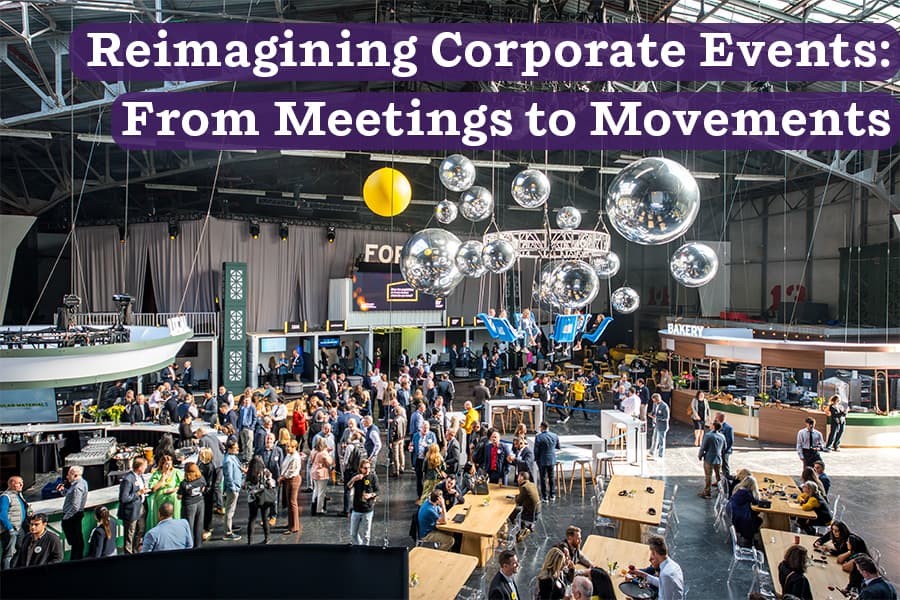
For years, company gatherings followed a simple and tired formula. A stage, a screen, a few speakers, maybe a team dinner. But as work and culture continue to change, so do expectations. Teams want purpose, energy, and connection from their corporate events. Those are things a slideshow or hotel ballroom can’t provide.
Across industries, leaders are rethinking how they bring people together . The goal is no longer to simply share updates. It’s to create moments that inspire alignment, strengthen culture, and remind people why they belong. When an event is designed like a movement instead of a meeting, it stops feeling routine and starts driving real momentum.
Here’s how to turn your next corporate gathering into an experience people can leave feeling inspired.
Why “Movement” Matters for Corporate Events
According to Cvent’s Corporate Events Benchmarking Report 2025, a top challenge for planners is proving value to business stakeholders (CVENT). At the same time, Bizzabo’s 2025 State of Events shows a clear rise in investment and expectation for events that truly engage attendees (Bizzabo).
In short, events can no longer focus only on logistics. They must connect emotionally, reflect brand purpose, and invite action.
Five Corporate Event Design Shifts to Consider
| Traditional Meetings | Movement Event |
| PowerPoint slides and panel discussions | Story-driven flow that connects facts to emotion and purpose |
| Lecture-style, audience just listens | Audience contributing through open dialogs, polls, workshops, and hands-on activities that shape outcomes |
| Separate sessions in isolated spaces | Integrated environments where each room builds on the next and energy carries forward |
| Rows of chairs facing a stage | Configurations that change throughout the day: theater for focus, clusters for teamwork, lounges for conversation |
|
Closing remarks followed by goodbyes |
A defined ending that reinforces commitment and unity, leaving guests motivated to act |
Here’s how to make those shifts work in practice:
-
Frame your purpose early
Start with why the event exists. Define the shared goal or belief that ties everyone together. Every session, meal, and visual should reinforce that purpose. -
Craft a narrative flow
Build a story arc that mirrors the day. Open with curiosity, build with discovery, and close with clarity. Use pacing, lighting, and music to match each stage of the story. -
Invite participation
Replace passive viewing with interactive moments. Ask guests to share insights, collaborate in real time, or make creative choices that influence the event’s outcome. -
Use space to shape energy
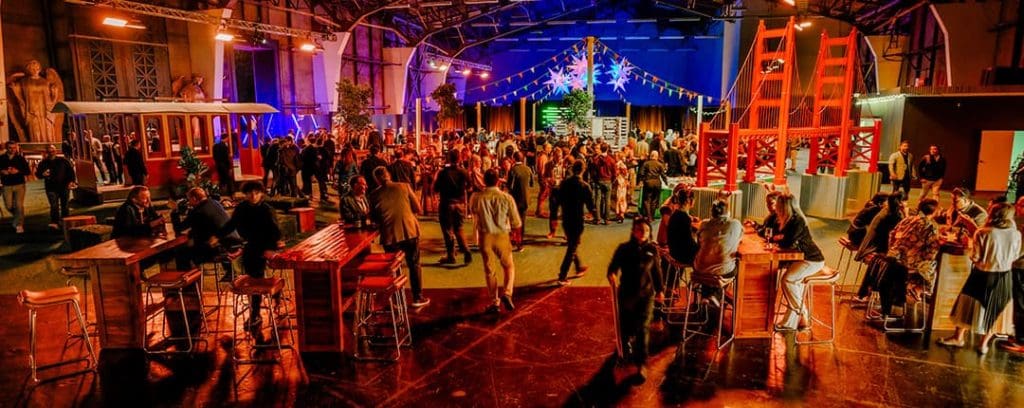
Let the venue work for you. Move people from large presentations to smaller breakouts, then into social zones that encourage open conversation. Spaces like NPU’s SVN West or The Mint are built to support this kind of motion and flow. -
End with intention
The close should feel like a resolution. End with a message or experience that gives people ownership of what comes next, whether that’s a new goal, a promise, or a symbolic moment shared by everyone in the room.
Example In Practice: Dreamforce
Each year, Dreamforce by Salesforce transforms San Francisco into a living brand story. Instead of holding sessions inside a single convention center, the event turns the city itself into a connected environment. Streets become networking corridors. Parks turn into lounges and learning zones. The Moscone Center becomes an immersive “campground” filled with trees, soundscapes, and installations that reflect the company’s values of connection and community.
Attendees move through themed spaces that change tone and purpose throughout the day. One area focuses on innovation, another on giving back, and another on personal growth. Every transition builds emotional momentum. People do not just attend Dreamforce. They take part in it.
This is what it means to turn a meeting into a movement. The event tells a story through its physical flow, its use of space, and its ability to make every guest feel part of something larger.
Of course, not every company can plan on the same scale as Salesforce, but the idea still applies. When planners think in terms of movement, story, flow, emotion, and shared purpose, they can create that same sense of meaning at any level. Dreamforce works as a north star rather than a benchmark. The goal is not to match its size but to capture its spirit of participation, creativity, and connection.
Why Corporate Event Venue Selection Matters More than Ever
A basic meeting room cannot carry a movement-style event. The right venue provides flexibility, production capability, and atmosphere. Today’s planners demand spaces that simply do more.
Industry standards are still vital in considering your venue:
- Location
- Travel time
- Accessibility
Quickly gaining in importance, however, are a new set of standards that should also be weighed in your venue decision in order for your event to truly shine:
- Overall uniqueness of the space
- Layout adaptability / flexibility
- Dedicated networking spaces
- Ethical / sustainability practices
- Access to public transportation
- Internet connectivity (Corporate Event News 2025).
A prime example of a venue that checks all of these boxes is NPU’s very own San Francisco Mint.
Final Thoughts
Meetings still matter, but today they must do more. Design your events to spark identity, community, and action. Choose partners and venues that support creativity, flexibility, and production excellence.
When you treat your event like a movement, it can do more than deliver information. It can build culture, fuel connection, and move your team forward like nothing else.
Ready to plan your next movement-style event? We have the perfect spaces for you. NPU’s portfolio of event venues are a perfect blend of unique and highly adaptable, with prime Denver and San Francisco locations. Perfect for you to flex your creative event planning muscles. Schedule a walkthrough of our spaces today to see for yourself.