
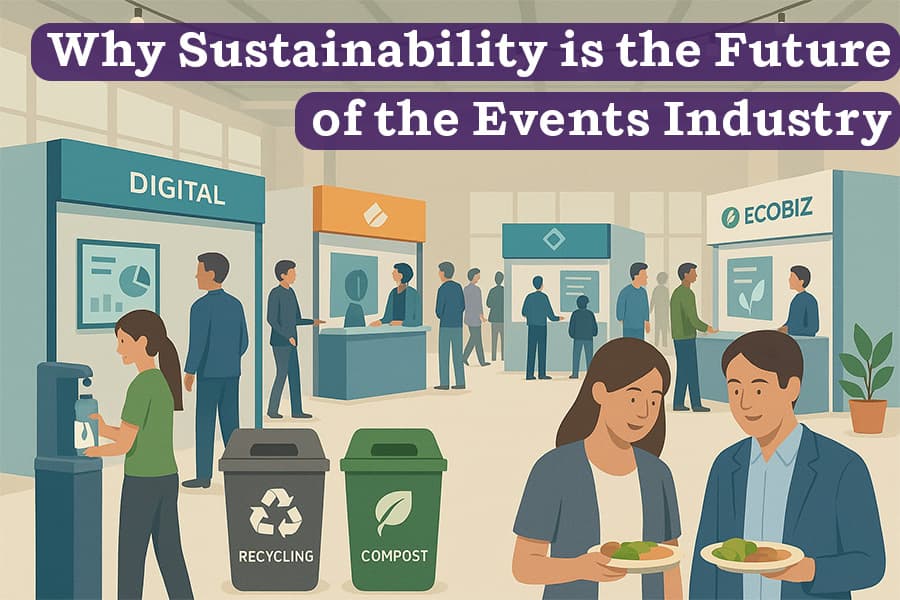
Events bring people together, but they also consume resources fast. A single multi-day conference can produce several tons of waste, and generate significant carbon emissions through travel, electricity, and shipping. As a whole, the global event industry generates a whopping 1.5 billion tons of CO2 annually (wiftalents.com). The importance of incorporating sustainability practices into all aspects of your events is quickly becoming one of the most important considerations you can make in the planning process.
The shift is also not only environmental, but cultural and economic. Clients and audiences increasingly choose partners and events that align with their brand values. Attendees are more vocal than ever about wanting green options. Sponsors and investors are tracking sustainability metrics in their decision-making.
Events that ignore these expectations risk looking outdated or careless.
Why Audiences and Clients are Driving Sustainability Change
At the end of the day, people expect more from the brands they support. Sustainability has become a reflection of identity for both hosts and attendees.
-
For clients, sustainable practices show social responsibility. It tells investors and customers that they take their impact seriously. This aligns with corporate ESG (Environmental, Social, Governance) goals, which are now a standard reporting category for many global companies.
-
For attendees, it is about participation without guilt. Guests want to feel they are part of something meaningful, not wasteful. According to a 2024 report by the Events Industry Council, more than 70 percent of attendees say environmental practices influence whether they attend an event.
-
For brands, sustainability enhances reputation. Sharing green practices across marketing channels turns operational improvements into storytelling opportunities that build loyalty and engagement.
Sustainability is not just about the planet, it is about perception. Doing it well sets a higher standard for professionalism and care across the board.
The Business Case for Sustainability

Sustainable event practices are not just good ethics, they are good economics.
-
Lower costs: Reusable materials, efficient energy systems, and local sourcing often reduce overall expenses. SpotMe’s sustainability report found that events with strong sustainability plans saved an average of 20 to 30% in operating costs.
-
Increased marketability: Clients and sponsors are more far more likely to support events that align with their sustainability goals.
-
Regulatory advantage: Many cities and convention centers now offer tax breaks or rebates for sustainable event operations.
-
Long-term brand value: Sustainable operations greatly build credibility and set a strong foundation for future event – and business – growth.
The Environmental Side of Event Sustainability
1. Energy and emissions
Energy use is one of the biggest environmental factors for events. Lighting, audio-visual systems, and climate control consume large amounts of power, especially in multi-day conferences or large outdoor productions. For venues, look to those that utilize LED lighting, high-efficiency HVAC systems, and renewable energy sources such as solar or wind power to help minimize these energy expenditures. LED lighting alone, for example, can reduce overall energy usage by up to 75% (wiftalents.com).
Where renewable sources aren’t an option, simple steps still add up. Schedule power-down times for equipment, run fewer high-energy fixtures at once, and work with venues that participate in green power programs.
2. Waste and materials
Events create a lot of waste, from single-use cups and food containers to temporary displays and leftover décor. Reducing that waste does not have to mean compromising on quality or guest experience.
Replace plastic water bottles with refillable aluminum ones, or install hydration stations that encourage guests to bring their own. Non Plus Ultra subscribes to this at all of our venues, where all water is served exclusively in reusable aluminum bottles.
Use biodegradable plates and utensils made from materials like bamboo or sugarcane pulp, which are 100% compostable. This helps avoid the water waste of traditional dishwashing, while simultaneously reducing plastic waste by up to 70% (gitnux.org). Encourage vendors to limit packaging, and provide visible, well-labeled waste and recycling bins throughout the space. Guests are far more likely to recycle and compost correctly when the process is easy and obvious.
Informational and display materials can also be a major culprit for waste production. To combat this, keep things digita. Digital signage, digital admission tickets, event apps with maps, session information and schedules, etc. This can reduce the need for disposed printed materials by 80% (wifitalents.com), while providing big savings on printing.
3. Food and catering
Food also plays a big role in both the event experience and its environmental footprint. Sourcing, preparation, and waste all contribute to carbon emissions. Choosing the right approach can make catering one of your strongest sustainability wins.
Serve locally sourced and seasonal ingredients whenever possible, which cuts down on transport emissions and supports nearby producers. Offer more plant-based options, since plant proteins typically require less land and water to produce than meat.
Plan portions carefully to avoid overproduction, and donate safe leftovers to local food banks or community kitchens. for example, NPU partners with Re-Plate for all of our San Francisco venues, redistributing surplus meals to communities in need.
Finally, communicate these efforts to attendees. When guests see visible sustainability measures, such as refill stations, local ingredients listed on menus, or compost bins beside trash bins, they not only participate but also remember that the event cared enough to take action.
Where to Start
Sustainability implementation for your events may sound broad and intimidating, but improvement starts with small, consistent steps.
-
Set clear goals. Define what sustainability means for your event. Pick a few focus areas such as waste, energy, travel, or food.
-
Choose responsible partners. Work with vendors and suppliers that share your sustainability values.
-
Communicate it clearly. Let attendees know what you are doing and how they can take part. Visible efforts build buy-in and awareness.
-
Measure and report. Track metrics like waste diversion, carbon reduction, or donation totals, and share those outcomes publicly. You get to make a difference, and be recognized for your efforts. Wear your impact proudly in event communications.
-
Keep learning. The industry evolves quickly. Stay informed on new materials, certifications, and technology that make sustainable planning easier.
The Bottom Line
Sustainability is shaping the future of the events industry. It reduces environmental impacts, reduces costs, protects resources, and builds stronger brands. More importantly, it aligns the industry with the values of the people it serves.
Event professionals have the power to influence behavior on a large scale. Every small shift adds up quicker than you might think. The next generation of events will not only entertain and connect people, it will help protect the world those people share.
At Non Plus Ultra, we see sustainability as legacy work. Every partnership, every building upgrade, and every small change compounds into measurable impact.
Our commitment to green systems, food-rescue collaborations, and waste reduction programs reflects one belief: unforgettable events should leave memories and impact – not carbon footprints.
If you are ready to plan an event that is as environmentally conscious as it is creative, let’s talk. We would love to show you our spaces.