
In 2025, the most compelling brand experiences did not come from novelty alone. They came from intention. Brands began treating event space as a creative partner rather than a neutral container, using layout, flow, and scale to shape how people felt as they moved through an experience.
Large environments were no longer something to fill as efficiently as possible. They became landscapes to design. Guests were guided through moments of energy and pause, discovery and connection. Space helped tell the story before a word was spoken.
Here are the spatial approaches that defined 2025, each paired with a real world example that shows how thoughtful use of space can elevate an event.
1. Large Scale Environments Became Narrative Landscapes
Instead of overwhelming guests with everything at once, planners designed large spaces as journeys. Distinct zones created emotional pacing, allowing guests to move through environments with purpose rather than wander aimlessly.
Real world example
At CES 2025, Samsung transformed its expansive exhibit presence into a series of connected environments focused on themes like home, sustainability, and future living. Guests moved through immersive zones that demonstrated how technology fits into everyday life, using scale to create clarity instead of noise.
Why it matters
When large spaces are designed with a narrative focus, guests better understand where they are, what they are experiencing, and why it matters – all with a natural progression.
2. Transitional areas became part of the experience
One of the most useful spatial shifts in corporate events this year was the elevation of space that normally gets treated like background. Pre-function areas, connector walkways, outdoor plazas, and the “in between” space became part of the agenda. Not as overflow, not as filler, but as real places for discovery, community, and momentum.
This approach does two things at once. It spreads engagement across the footprint, and it makes the entire event feel more alive. Guests stop moving on autopilot and start experiencing the venue as a sequence of moments.
Real world example
At Dreamforce 2025, Salesforce used the scale of Moscone Center and the surrounding downtown footprint to create an experience that extended beyond session rooms. Coverage of the event describes how the conference took over Moscone and nearby areas, drawing tens of thousands downtown with expansive show floor energy and themed environmental elements inside the venue.
Why it matters
When corporate events treat non-traditional space as usable space, the venue stops feeling like a container and starts feeling like an experience. It improves flow, reduces congestion, and creates more opportunities for connection without needing more square footage.
3. Hospitality zones to break up the action
Not every moment of a large event is meant to be high energy. The most thoughtful experiences in 2025 acknowledged the need for contrast, using hospitality spaces to create balance within the overall flow of the event.
These zones were not treated as side perks or VIP-only add-ons. They were intentional environments designed to support rest, conversation, and connection while keeping guests engaged with the experience as a whole.
Real world example:
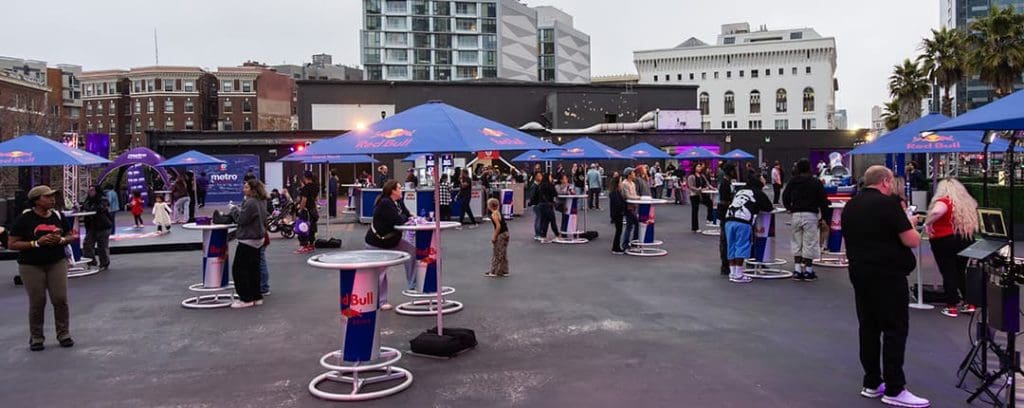
During Red Bull Dance Your Style at SVN West, Red Bull dedicated the venue’s expansive rooftop patio as a hospitality zone for attendees. Instead of leaving the rooftop unused or secondary, the brand activated it as a social retreat where guests could step away from the intensity of the dance battles below.
The space offered snacks and drinks, seating for groups to gather, and open air views of the San Francisco skyline. Guests used the rooftop to relax, catch their breath, and reconnect with friends before heading back inside. The environment provided contrast without disconnecting attendees from the event’s energy.
Why it matters
Hospitality zones like this demonstrate how large venues can support multiple emotional needs at once. By dedicating meaningful square footage to comfort and connection, Red Bull created an experience that felt generous rather than overwhelming. In large scale events, these moments of pause often shape how the entire experience is remembered.
4. Major cultural moments turning entire cities into event spaces
Some of the most ambitious uses of space in 2025 happened when brands stepped beyond a single venue and activated entire neighborhoods. Instead of concentrating energy in one footprint, planners distributed experiences across a walkable district, allowing the city itself to become part of the story.
Real world example:
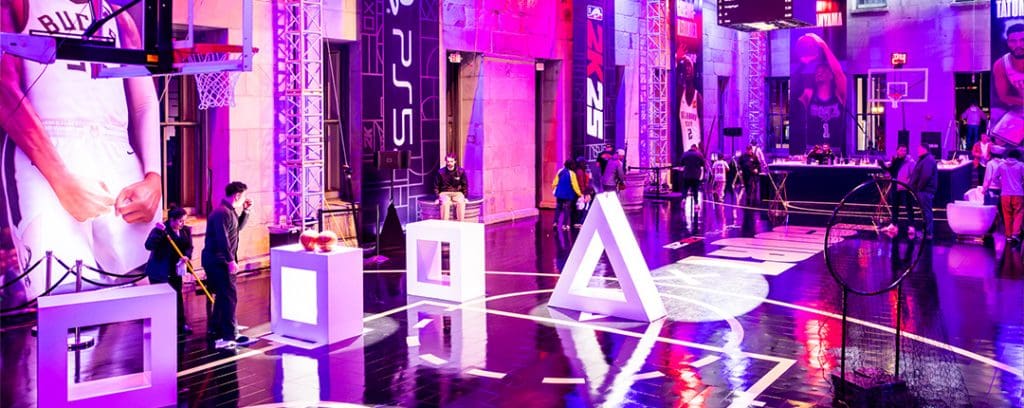
During NBA All-Star Weekend 2025 in San Francisco, brands transformed downtown into a multi-day experiential landscape. Powell Street became NBA All-Star Alley, where fans encountered pop-ups, interactive challenges, and brand installations woven directly into the urban environment. The event festivities spread throughout San Francisco, including at several NPU venues:
PlayStation hosted The Court – a gaming-focused experience centered on NBA 2K at The Mint, turning the historic event space into a competitive and social hub that blended digital play with in-person energy.
Adidas took over SVN West, using the scale and industrial character of the venue to host immersive brand programming tied to basketball culture, sneaker heritage, and athlete influence, creating a destination that felt cultural and communal.
Why it matters
By activating multiple venues and public spaces at once, All-Star Weekend turned downtown San Francisco into a connected experience rather than a single destination. We can’t wait for you to see what’s to come for The Big Game next year!
What 2025 made clear
Scale is not the opposite of intimacy. Poor design is.
The most successful events of 2025 used space to guide energy, support pacing, and create meaning. When space is treated as a creative partner, large environments feel immersive instead of overwhelming.
For NPU and its clients, the takeaway is clear. Large venues are not just places to host events. They are platforms for narrative, culture, and shared experience when designed with intention.
Ready to start planning your 2026 events? We can help you find the perfect space to put these trends to use. Contact our Team to schedule your personal walkthroughs today!