
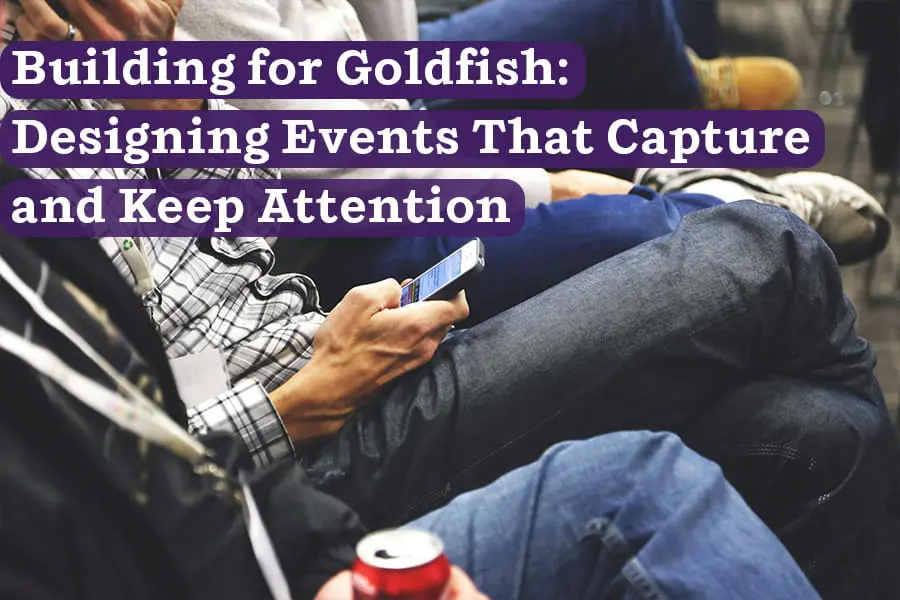
Walk into any corporate event today, and you see it everywhere.
Phones are out.
Eyes are drifting.
Side chats in the back row.
Audience attention is harder to hold than ever. The average person looks at their phone about 96 times per day. (SQ Magazine)
Event planners see it. Speakers sense it. Sponsors worry about it. If you cannot hold focus, your message fades fast.
Event design matters now more than ever.
Attention is the New Event Currency
People usually attend events with good intent. They want to learn, meet peers, and to be inspired.
But they are also used to short bursts of content. Social feeds. Quick videos. Text alerts every few minutes.
Long blocks of passive listening do not land like they used to, and the numbers back it up. New research suggests the average human attention span has fallen by as much as 33% in the last 25 years. (Keevee)
If your program runs for 60 minutes without a shift in format, energy drops. When a stage looks flat or distant, eyes wander. If guests feel like observers instead of part of the room, they check out.
The old lecture-style standard is dying, and event design must respond to this shift.
Break the Pattern
Recent behavior studies found that sustained focus drops sharply after about 10 to 20 minutes of passive listening. (Townsend)
But don’t worry. This doesn’t necessarily mean your content must be short. It simply means delivery needs to shift regularly before attention slips.
Keeping your audience engaged and interacting during sessions is one of the easiest ways to combat mental drift.
Effective moves that work:
-
Instead of a 60-minute lecture, break your session into three 20-minute segments
-
Hold live polls or Q&A every 10 to 15 minutes to keep your audience engaged
-
Use high-energy video clips or demos to reset energy
-
Change lighting or stage visuals between (or even during) sessions
These small shifts help wake the room up and reset the engagement clock.
Body Movement Supports Focus
Attention drops when the body stays still.
Build in reasons to move.
- Networking breaks that feel planned, not random.
- Food stations that draw guests across the room.
- Interactive demos placed along a natural path.
Even stage design and speaker behavior can help in this as well. A speaker who moves with purpose during their session keeps eyes locked far longer than one who stands behind a podium.
The event space should guide motion. Open sight lines. Clear flow. No dead zones in the back corner where people can hide on their phones.
When guests move or witness movement, focus resets.
Visuals for the Win
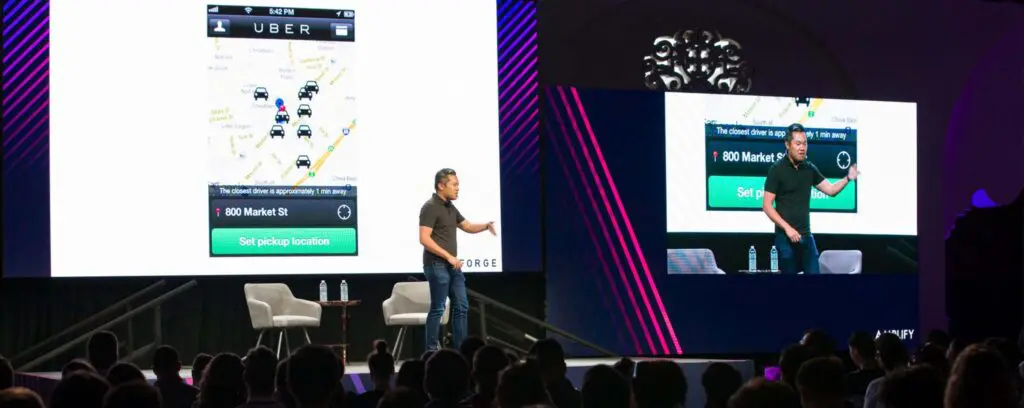
The brain reacts to visuals faster than speech.
- Large screens with bold graphics.
- Simple slides with one idea at a time.
- Strong color contrast on stage.
Avoid text-heavy decks. No one reads paragraphs from a distance. Especially if the speaker recites the slides verbatim.
Production design plays a major role here too. Lighting, LED walls, and scenic builds are not just for show. They support focus. A well-lit stage with depth and design elements that draw focus keeps attention longer than a flat wash of light and beige walls.
At larger conferences, this becomes even more critical. Trade show halls and general sessions compete with noise and scale. Visual clarity helps to cut through that clutter.
Use Data to Guide Design
As we’ve mentioned in one of our previous articles, event technology is advancing at an accelerating rate. Planners can now even track which event elements hold attention and which ones don’t.
Tracking tools can measure:
-
Session engagement rates
-
Attendee flow by location
-
Lenght of time spent at a booth or demo
This data helps planners make decisions based on real statistical behavior.
If guests leave halfway through a panel, what were the topic or visuals when you lost them? If a demo zone stays full, study why, and figure out how to replicate it. Smart design is built on real feedback.
Bring the Brand Closer

Sponsors and hosts face a real challenge. How do you share a clear message when attention is split?
The answer is not to talk longer. It is to get closer.
Smaller off-site events during major conferences often outperform booth time on the show floor. A focused guest list. A tight program. A room built for real talk.
When guests feel seen, they stay engaged.
Designing for shorter attention spans is about stripping away distractions and giving the audience more reasons to want to pay attention.
Pick Venues that Support Focus
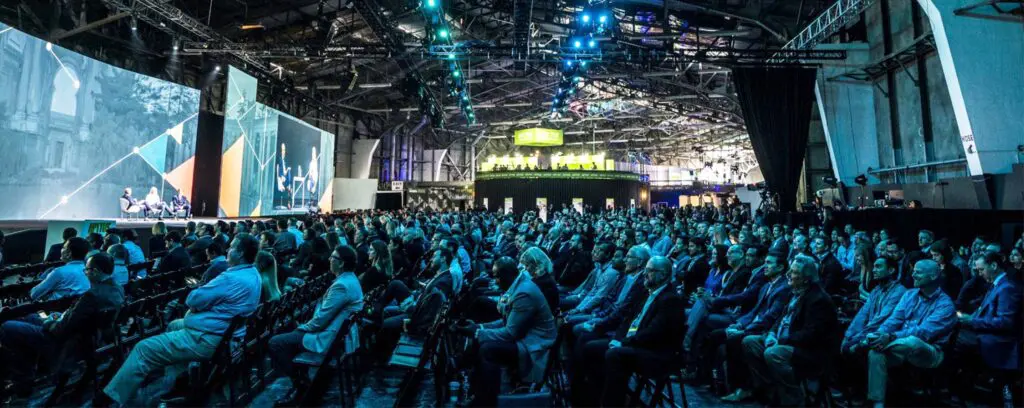
Venue choice shapes attention before the program even begins.
- High ceilings and clear acoustics help guests focus.
- Flexible layouts allow quick format shifts.
- Breakout rooms offer space for short, sharp sessions.
The Palace of Fine Arts is a prime example of an event venue that checks all of these boxes in style.
The right event space makes event design so much easier.
TLDR
Modern event design must account for shorter attention spans.
Shorter segments, clear visuals, planned format shifts, and data-driven layout choices help keep attendees engaged from start to finish.
Ready to give your next San Francisco event your attention? Let’s us know! We’ll be happy to help you choose a venue or schedule your personal walkthrough of our venues. Reach out before you forget!