
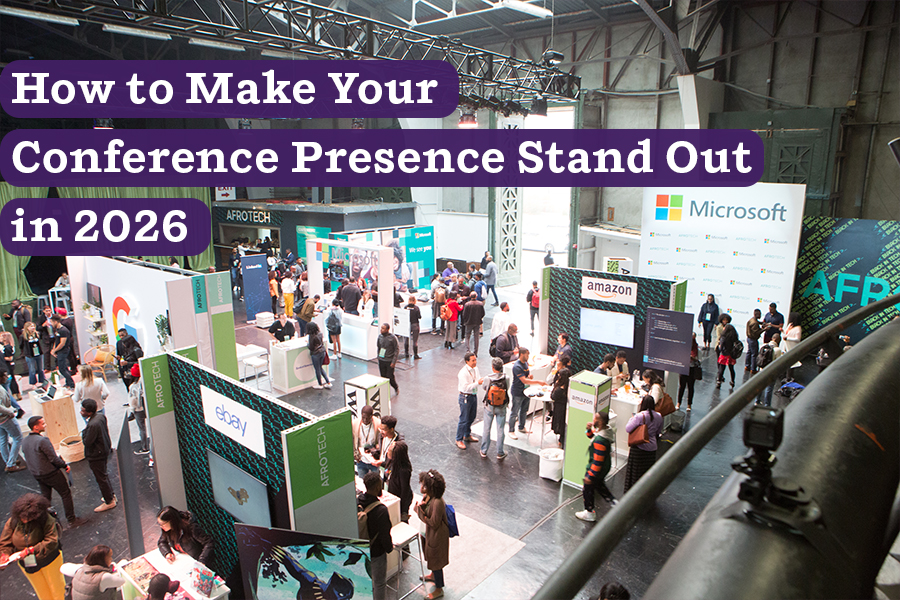
Conference visibility can be very expensive. Being forgotten is even more costly.
Brands invest heavily in booths, sponsorships, demos, travel, hospitality, and team time. But once the doors open, they are competing against every screen, sign, session reminder, meeting invite, and branded giveaway in the building.
That is the real challenge for exhibitors and sponsors.
Conferences are still one of the strongest ways for brands to get in front of large groups of people that they know are in their target demographic. Recent industry research continues to point to the value of face-to-face events, with B2B exhibiting still commanding a major share of exhibitor marketing budgets and in-person events remaining one of the most trusted channels for professional learning and connection.
But attention is not guaranteed just because your brand has a footprint on the floor.
It’s not enough just to be present. Presence is the baseline. You need to build a conference experience that gives people a reason to stop, stay, and remember the brand after the week is over.
From strong booth design and special off-site events, to new conference tech and promotion, here are some of our favorite strategies to make your brand truly stand out at your next conference.
Make the Booth Work Before Anyone Says a Word
Your booth does not need to explain everything about your brand.
In fact, it probably shouldn’t try to.
Attendees are moving quickly. They are reading from a distance, half-listening to conversations around them, checking session times, and deciding whether they have enough interest to stop. If your booth assaults them with a wall of information, most people will keep walking.
The strongest booths tend to make one idea easy to understand.
What does your product do? Who is it for? What problem does it help solve? Why would someone at this conference care?
That clarity matters more than cleverness. A headline that sounds sharp in a planning meeting can still fail on the floor if it does not tell people what they are looking at in a clear, concise manner. The same goes for visuals. Screens, graphics, lighting, product displays, and demos can all help, but only if they help capture attention early. Save the deeper details for the conversation you can have now that they’ve decided to stop and learn more.
There is also the practical side of where the booth sits and how it functions once people reach it.
Where do people naturally stop and congregate on the show floor? Can someone watch a demo without blocking the aisle? Is there room for a real conversation? Does the booth still make sense when it is crowded, noisy, and surrounded by other brands trying to pull attention in every direction?
Those details can be easy to overlook when everything is still in renderings.
Location on the show floor can change the entire experience. A booth near a main entrance, session path, food and beverage area, sponsor zone, or natural traffic break may have a different advantage than one tucked into a quieter aisle. But traffic alone is not the whole answer. A high-visibility spot still has to give people a reason to stop, and a smaller footprint still needs to make the most of the attention it gets.
A booth should look good, of course. But it also needs to work. It needs to help the team start better conversations and help attendees understand why those conversations are worth having.
Hosting an Off-Site Event Away from the Conference Floor
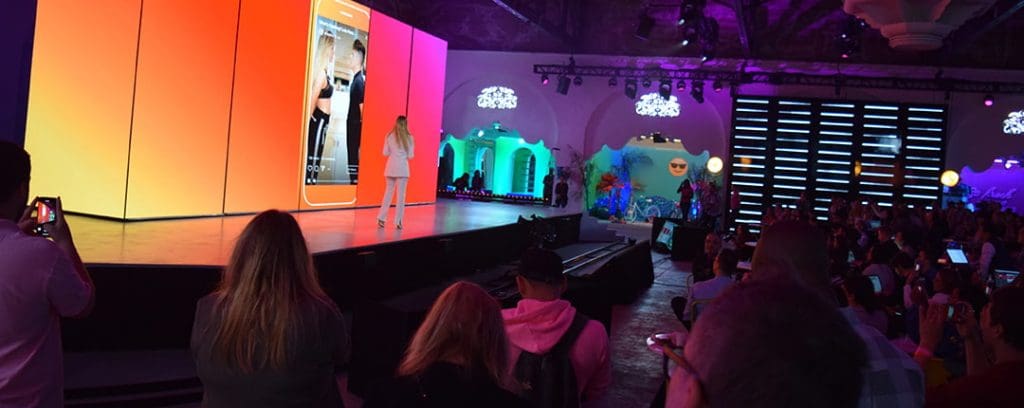
It may seem counterintuitive to stray away from the conference hub to be seen, but hosting off-site events can be one of the most powerful strategies to give your brand true gravitas at a conference.
On the show floor, your brand is one stop among hundreds. Even with a strong booth, you are still essentially crossing your fingers that the right people will walk by, slow down, and decide whether or not they have enough interest to speak with you.
An off-site event changes the dynamic.
Instead of trying to pull attendees out of the aisle, your brand becomes a destination that conference-goers want to be a part of.
That could mean a product launch, a hands-on showcase, a large-format reception, a client event, a happy hour, or a more immersive brand experience tied to the larger conference week. The format can shift depending on the audience and the goal, but the larger purpose is the same: create something people choose to attend, not just something they happen to pass.
That is what separates a useful off-site from another event on the calendar.
It gives the brand more room to shape the environment, the pacing, the guest experience, and the way people interact with the message. The conference may be the reason everyone is in town, but the off-site can become the place where the brand has more control over what people actually remember.
The risk is assuming that “off-site” automatically means more memorable.
It does not.
Attendees are already choosing between dinners, receptions, client meetings, team obligations, and whatever time they hoped to keep for themselves. If your off-site event feels like a thinly branded networking hour, it becomes much easier to skip.
Before adding it to the calendar, ask whether the experience gives people a real reason to leave the convention center. If the answer depends only on free drinks, convenient timing, or another round of casual mingling, the idea probably needs a bit more thought.
For a deeper look at this strategy, including event concepts, things to avoid, the importance of venue selection, and more, see our previous article on Why Off-Site Events Make a Big Impact at Conferences.
Getting Attendees to Come to You with Interactive Elements
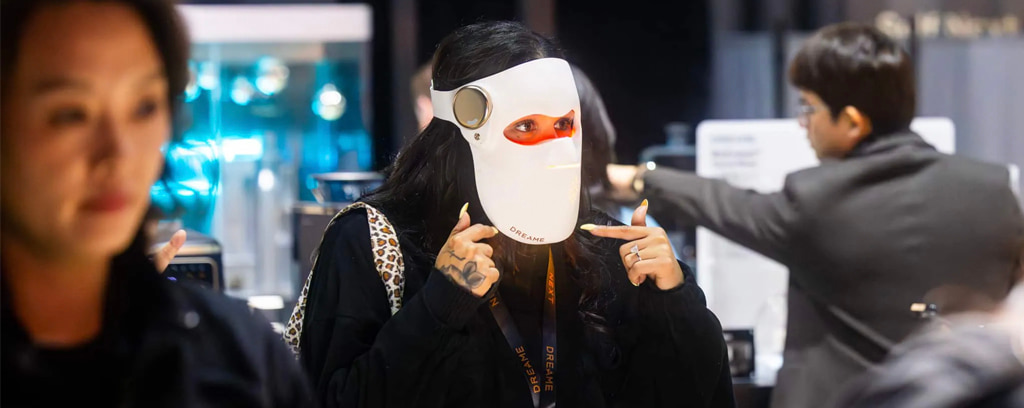
An impressive booth helps people notice you. It does not guarantee they will stop.
That is often the hardest hurdle to get past on a crowded floor. Strong design, looping videos, and polished handouts can get a glance, but the booth still needs to give attendees a reason to pause, step in, and start a real conversation.
Interactive elements can help create that opening. They pique curiosity and give people something to try, test, explore, or respond to, making the first interaction feel more natural than just another pitch from the aisle.
Product Demos
This is often the easiest place to start. Show the product in motion. Let people see the problem it solves firsthand. Give them a reason to ask a better question than “so, what do you do?” For more complex products, an interactive or self-guided demo can help visitors move through the details without waiting for a staff member to restart the pitch from the beginning.
Touchscreens
These handy devices can give attendees a more active way to move through the booth experience. Instead of only hearing about the product, they can choose a path, answer a few prompts, compare options, explore a demo sequence, or identify the problem they are trying to solve.
That interaction can make the experience feel more relevant to the person using it. It can also give the sponsor more useful information than a basic badge scan, including contact details, product interest, use case, company type, or follow-up preferences.
There is a practical benefit, too. If the booth team is already speaking with someone else, a touchscreen can still give the next visitor a reason to stay, engage with the offering, and enter the conversation with more context.
Gamification
This is another excellent way to draw additional attention and add another level of interaction.
Be it a prize wheel, trivia challenge, product-matching game, timed demo task, scavenger hunt, or more, this element can give attendees a low-pressure reason to engage with your booth. You can also take it one step further and create a little competition around the booth with a live leaderboard for scored or timed games. People see others participating, notice the scores changing, and become more curious about what is happening.
The best games still need a connection to the brand. A challenge can test industry knowledge. A matching game can point attendees toward the right product or service. A timed task can show how quickly a tool works. Even a simple giveaway can become more useful when it is tied to a question, preference, or product interest.
For the sponsor, the value is not limited to additional booth traffic. Gamified experiences can also help collect contact information, qualify interest, track which products or topics people engaged with, and give the sales team more specific information to follow up with after the event.
Virtual Reality and Augmented Reality
VR and AR can bring a different kind of draw to the booth.
A headset, augmented overlay, or immersive screen experience will almost always make people curious enough to stop and participate.
The strongest use cases are usually the ones that cannot be easily recreated inside the booth.
For a manufacturer, that might mean letting attendees walk around a virtual piece of equipment. For a real estate, hospitality, or venue brand, it could mean offering a virtual space tour from the booth. For a software or service company, it might mean turning a complicated workflow into a guided scenario.
The ultimate goal in all of this is to give attendees more reason to pause and learn more about your offering, and to give them a more active role in the experience. The more they do, the more your team can learn about what they care about and where the next conversation should begin.
That is a stronger result than just another badge scan with no context behind it.
Looking for more inspiration? AVFX offers a useful breakdown of interactive trade show technologies, from touchscreens and RFID-enabled experiences to VR, AR, projection mapping, live polling, and gamification.
Use Social Media to Extend the Booth Beyond the Floor
A booth only reaches the people who walk past it.
Social media gives your conference presence a much longer reach. Used well, it can help attendees find the booth, understand what is happening there, and stay connected even after they leave the show floor.
A strong social strategy should be planned well before the team arrives on-site. Decide what to promote before the show, what to capture while the floor is open, and how to keep the conversation moving afterward.
The key is to treat social media as part of the conference plan, not just a place to post recap photos once the event is over.
Different Channels Play Different Roles
- LinkedIn works well for product context, thought leadership, executive posts, client conversations, and post-event takeaways.
- Instagram is useful for more visual moments, including booth design, reels, stories, quick interviews, and off-site event highlights.
- X is best used for real-time updates, booth reminders, conference hashtag conversations, and fast reactions to sessions or industry themes.
- TikTok or YouTube Shorts can work when the booth has a visual hook, quick demo, challenge, or before-and-after story.
Building Pre-Show Hype
Before the show, use social channels to help attendees know where you’ll be, and give them a reason to visit:
- Share the booth number and what attendees can experience there.
- Tease a product demo, giveaway, challenge, or live activation.
- Invite clients, prospects, partners, and press to schedule time with the team.
- Preview an off-site event or happy hour tied to the conference week.
A simple LinkedIn post could look something like this:
“Heading to [Conference Name]? We’ll be at booth [number] with a hands-on look at how [product/service] helps teams solve [specific problem]. Stop by for a demo, meet the team, and see what this could look like for your organization.”
During the Show
Social media can help further expand your presence during the event with content like:
- Short clips of product demos or booth interactions.
- Sharing leaderboard updates from a timed challenge or trivia game.
- Encouraging participation in gamification (especially if participation brings attendees back to the booth)
- Running a poll tied to an in-booth activation.
- Using the conference hashtag to join larger event conversations.
- Featuring quick takeaways from sessions, speakers, or booth conversations.
- Encouraging attendees to tag the brand after participating.
Post-Show Engagement
After the conference, you can (and should) still share posts that summarize your experience at the event and encourage further interaction with attendees. But it can go even further than that.
Use the follow-up posts to share what the team heard, what questions kept coming up, what the demos revealed, or what the brand is seeing in the market.
A good social plan gives the booth a larger, longer life outside the show floor. It can draw people in before they pass by, create more activity while the floor is open, and keep the strongest conversations moving well after the conference ends.
Don’t Forget to Follow Up
The conference does not end when the booth comes down.
This is often where a lot of good conference momentum gets lost. Follow-up messaging gets delayed or overlooked. Someone who spent 20 minutes in a demo ends up in the same email flow as someone who dropped a card in a bowl. A client who came to the off-site gets the same generic thank you as a cold booth scan. It happens all the time, usually because the team waits too long to organize what came in.
In order to build a successful follow-up strategy, you need to start planning before the event even starts.
Segment your lists by what people actually did:
- Requested a demo
- Attended an off-site event
- Asked for pricing or product details
- Joined a game, poll, or touchscreen experience
- Scanned for a giveaway
- Existing client
- Press or partner contact
- etc.
From there, the follow-up gets easier to shape. A serious prospect may need a direct note tied to the problem they described. Someone who joined a product demo may need a resource that builds on what they saw. A client who attended the off-site may deserve a more personal follow-up from the right person on the team.
This does not mean writing a custom message from scratch for every contact. It means avoiding one generic recap for everyone.
This is also the time to ask what people thought.
A short post-show survey can help the team understand what worked and what did not. Was the booth easy to find? Did the demo make sense? Was the activation worth stopping for? What would attendees want to see next year?
The answers may not be dramatic, but they can make your next conference presence much stronger.
Good follow-up is not only about being polite after the show. It is how the team turns booth traffic, social engagement, off-site attendance, and attendee feedback into tangible, valuable leads and information.
Conclusion
Standing out at a conference is rarely about one big move.
The strongest conference strategies usually come from the way each piece works together:
- Host Unforgettable Off-Site Events at Unique Venues
Off-site events can become their own destination, giving clients, prospects, partners, and press a reason to spend more meaningful time with the brand away from the noise of the conference floor. - Make the Booth Easy to Understand
A strong booth should help attendees quickly understand who you are, what you do, and why the conversation is worth having. The design may earn the first glance, but the message still needs to land. - Give Attendees a Reason to Interact
Product demos, touchscreens, gamification, VR, and AR can make the booth feel more active and approachable. They give attendees something to try, test, explore, or respond to, instead of leaving the entire interaction to a cold pitch from the aisle. - Use Social Media to Extend the Booth Beyond the Floor
A planned social strategy can help people find the booth before they walk past it, create more activity while the floor is open, and keep the strongest conversations moving after the conference ends. - Make the Follow-Up Count
Segmenting contacts, tailoring follow-up, and asking for feedback can help the team turn booth traffic, off-site attendance, social engagement, and event conversations into something more useful once the conference is over.
Properly planning for and executing on these strategies is what makes for a truly strong conference presence. It helps a brand stand out in a sea of sponsors, keep the right conversations moving, and turn a few days on the show floor into something with more staying power.
For teams planning a presence at an upcoming San Francisco conference or trade show, NPU offers truly unique venues near major conference centers that are ideal for meaningful off-site events. Contact our team today, and we’ll be happy to schedule your personalized walkthrough.