
Not long ago, the safest venue choice was usually the obvious one.
A hotel ballroom. A conference room. A traditional event space designed to be efficient, familiar, and easy to plug into.
That kind of venue still makes sense for plenty of events. But it no longer holds the same automatic advantage it once did, and a notable shift is taking place.
Planners are looking elsewhere for a number of reasons. Some need more flexibility. Some are trying to create a stronger guest experience without overbuilding the event. Some are under pressure to make budgets work harder. And many are simply recognizing that the venue itself now plays a bigger role in how an event is perceived, remembered, and talked about afterward.
Cvent reports that 48% of planners are now sourcing nontraditional venues, with flexibility, attendee experience, and cost ranking among the leading reasons for doing so.
That shift says something bigger about where the industry is headed.
The Move Away from One-Size-Fits-All Venues
Part of what is driving the rise of nontraditional event venues is fatigue.
Audiences spend enough of their lives in generic rooms, generic feeds, and generic workflows. When they make time to attend something in person, they want it to feel distinct. They want texture. They want energy. They crave a setting that facilitates a different kind of attention and gives a reason to actually look forward to attending.
So many of the formats growing right now work much better when the venue already brings something to the table. Smaller dinners, roundtables, and hosted gatherings usually do not need more square footage. They need the right energy. They need a setting that helps people relax a bit, lean in, and actually want to stay in the conversation.
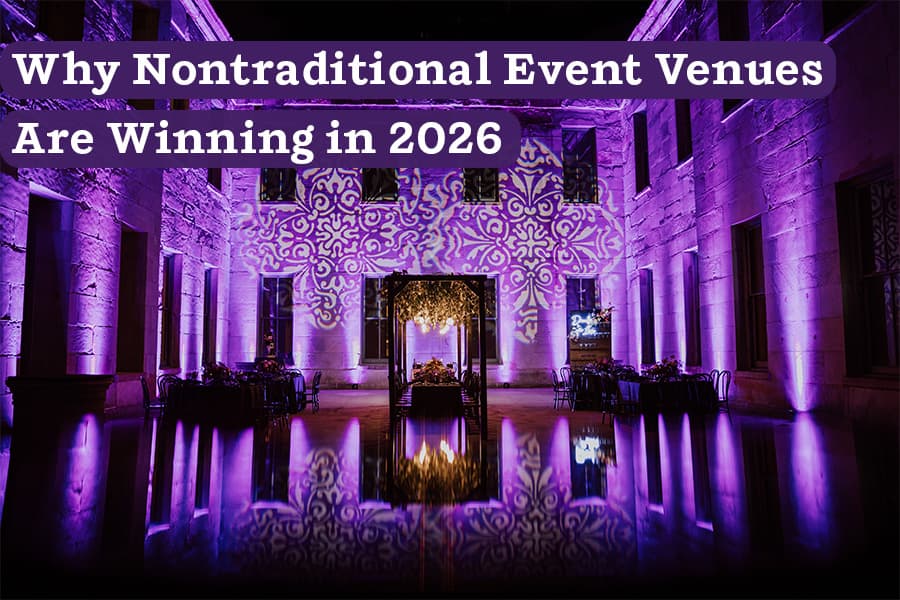
That is where spaces with unique character can make a real difference. A venue with a courtyard or multiple spaces changes the event pace. A rooftop terrace brings an unmatched ambiance. A historic venue can make the night feel special without overproducing it. You see that at The Mint all the time. The venue has enough identity to give even a relatively simple event real gravitas.
That is why these decisions are becoming more strategic. Planners are not only asking whether a venue works on paper. They are asking what the space adds once people are actually in it.
Why Venue Choice Has Become a Bigger Strategic Decision
What makes this shift worth paying attention to is that it is not just aesthetic.
Venue selection is starting to influence more of the event equation than it used to. It affects budget allocation, production needs, guest perception, and how much work the planner has to do to make the experience feel distinct.
That is part of the appeal of nontraditional spaces. When a venue already has atmosphere, identity, or a strong sense of place, the event does not have to be built entirely from scratch. Some of the tone is already there. Some of the visual interest is already handled. In the right setting, that can mean spending less energy (and money) trying to manufacture impact through rentals, decor, or heavy staging.
On the other hand, nontraditional venues that offer more of a blank slate are typically much more flexible in what is permitted within their walls. Need to change the wall color, or to add additional structures? Have a very specific design for a stage in mind and need space to make it happen? If the event calls for a truly customized build with lots of room for creativity, this is the direction to go. Spaces like The Brighton or SVN West are prime examples.
A venue is no longer just a place to host the program. It is part of how the event communicates what it is, who it is for, and why it matters.
That is why more planners are approaching venue sourcing as an earlier and more strategic decision than before. The question is not just whether the space can accommodate the event. It is whether the space helps the event do its job.
The Venue Is Part of the Brand Story Now
There is also a branding piece here that planners and venue teams alike should not ignore.
A venue says something before the event does.
It signals whether the brand feels polished or playful, buttoned-up or inventive, exclusive or welcoming. It shapes the emotional temperature of the room. And when brands are trying to stand out in crowded markets, those signals matter.
That is especially true for events designed around trust, relationship-building, or community. In-person experiences are increasingly being asked to do work that digital channels cannot do as well: create real presence, deepen connection, and give people a reason to remember how a brand made them feel. Amex GBT’s 2026 Global Meetings & Events Forecast found that attendees increasingly want more interactivity, more opportunities to socialize, and more visible sustainability measures than they did five years ago.
A generic room can host that kind of event.
A meaningful space can amplify it.
That is why more brands are looking for venues that feel like an extension of the event concept, not just a container for it.
TLDR
The takeaway is not that every event needs to move away from traditional venues. It is that venue choice matters more than it used to.
In 2026, the strongest events are not just well organized. They feel intentional from the moment guests arrive. The setting helps shape the energy, support the format, and make the experience more memorable long after it ends.
That is why more planners are looking beyond the standard ballroom and toward spaces with personality, flexibility, and a stronger sense of place.
For teams planning events in San Francisco, that opens up real opportunity. The right venue can do more than host the event. It can help define it. At NPU, that is exactly where we focus: helping brands find and activate spaces that make gatherings feel more distinctive, more connected, and more worth showing up for.
Ready to find a unique venue for your next event? Let us know, and we will be happy to help you explore your options.