
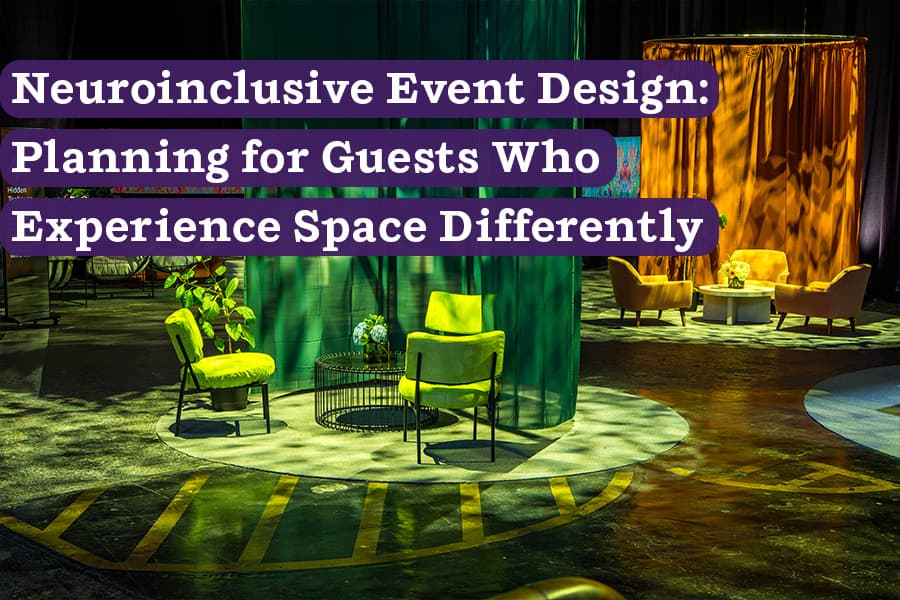
Not every guest experiences a great event the same way.
For many, high-energy events feel exciting. The music, movement, lighting, conversation, and pace all add to the experience. For others, those same elements can quickly become overwhelming, making the event harder to navigate, harder to enjoy, and harder to stay present in.
That is the heart of the growing argument for more neuroinclusive event design. It asks planners to think more carefully about how different guests might process the world around them, especially guests with autism, ADHD, sensory sensitivities, anxiety, dyslexia, PTSD, or other cognitive and neurological differences.
The goal is not to remove everything exciting from the room. A neuroinclusive event can still be bold, lively, beautiful, loud (in the right moments), and full of energy. It should simply give people more ways to be part of the event without forcing every guest through the same sensory and social experience.
For corporate events, that shift is becoming harder to ignore. The CDC estimates that about 1 in 31 children aged 8 has been identified with autism spectrum disorder, and 1 in 6 are diagnosed with a developmental disability. This has triggered broader conversations around neurodiversity, accessibility, and inclusive design, and is reshaping how people think about shared experiences.
For event planners, this is more than just a compliance issue. It is a design issue. A hospitality issue. A communication issue. A venue issue.
And when it is handled well, the event gets far more enjoyable for more people than you might expect.
What Neuroinclusive Event Design Actually Means
Neuroinclusive event design is about planning your event to be inclusive of guests who may process sound, light, crowds, movement, social interaction, written information, or schedule changes in different ways.
That can show up in a lot of ways.
A guest may need a clear agenda before they feel comfortable attending. Another may need captions to follow a keynote in a noisy room. Someone else may need a quieter place to reset between sessions. A guest with ADHD may appreciate movement breaks and clear transitions. A guest with sensory sensitivities may need to avoid strobes, sharp audio, or crowded bottlenecks. Quiet areas to decompress between agenda items can also make a world of difference.
A neuroinclusive event pushes planners to look beyond the big creative moments and think about the parts of the event that can quietly create unnecessary friction. In many cases, the most helpful choices are also the simplest ones that help the overall event for all guests: clearer information, better signage, calmer transitions, more seating, thoughtful sound, and a place to step away and reset if things feel overwhelming.
Give Guests a Preview Before They Arrive
Dates. Times. Location. Speaker list. High-level agenda. These are the standard details that every planner knows are vital to share with potential attendees to help them decide if they can and/or want to attend your event.
Neuroinclusive communication goes a step beyond logistics by helping guests get a better sense of the actual event environment.
The Sinneave Foundation’s 2026 neuroinclusive event guidance recommends sharing key details in advance, including information about the schedule, venue location and layout, food, parking, seating, lighting, noise expectations, and available accessibility supports.
That means sharing details that may otherwise seem obvious from the planning side. For instance, a guest with sensory sensitivities may want to know whether the event includes loud music, dramatic lighting, or a packed standing reception. A person with autism may feel more comfortable participating if they can review the full agenda, understand the layout, and know what to expect from each part of the event. Someone with ADHD may benefit from clear timing and insights on planned transitions. A guest with anxiety may be more likely to attend if they know where to go, who can help, and whether there is a place to step away.
When guests have a better idea of what they will be walking into, they can make decisions that help them participate. They can choose when to arrive. They can decide whether to bring headphones or other supports. They can plan around food needs. They can identify a quieter area before they need it. They can prepare for social-heavy parts of the agenda instead of being surprised by them in the moment.
For some guests, that information may be the difference between attending and skipping the event altogether.
It also gives people more privacy. Not every guest wants to disclose that they are neurodivergent, anxious, sensory-sensitive, or overwhelmed. Clear information lets them plan around their own needs without having to explain those needs to a staff member, sponsor, colleague, or stranger at check-in.
The same thinking should apply to support resources. Guests should not have to prove a diagnosis or explain personal details to access a quiet space, captions, seating, or other reasonable event supports.
A slightly expanded “what to expect” section of the event’s website can do a lot of work here. Keep it simple, but make it useful: agenda, venue layout, food notes, sound or lighting expectations, seating, quiet spaces, accessibility contacts, and any major transitions guests should know about.
Registration is also a good place to give guests a chance to share their needs ahead of time. A simple optional field asking whether attendees have accessibility, sensory, dietary, seating, or communication needs can help planners catch issues earlier, without making anyone feel singled out.
The more guests can prepare before the event, the less they have to solve in real time, and the more confident they can feel about signing up to participate.
Planning for Sound, Lighting, and Sensory Load
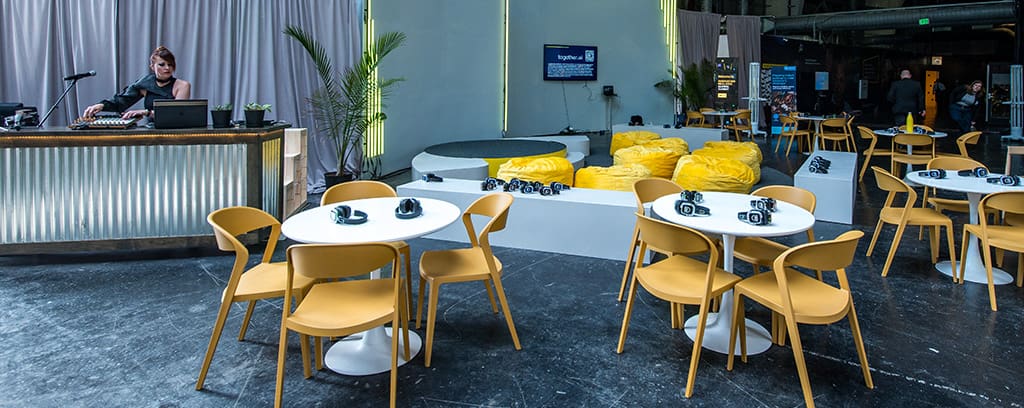
Sound can make or break comfort faster than almost anything else.
A room can look gorgeous and still feel exhausting if the audio is too sharp, too loud, or too muddy. Music that works for a dance floor may make conversation difficult during arrival. A cocktail hour with hard surfaces, high ceilings, and no sound plan can become overwhelming quickly. A stage program without clear audio can create fatigue and frustration for guests trying to follow along.
This is not only about volume. It is about clarity, echo, pacing, and contrast.
Neuroinclusive design asks planners to think about sound in zones. Where should the event feel energetic? Where should conversation be easier? Where can guests take a break from the main audio environment? Are there moments when music should come down so people can reset or move? Are captions or transcripts available for key content?
The ADA’s effective communication guidance focuses on making sure people with hearing, vision, or speech disabilities can receive and communicate information, which can include auxiliary aids and services depending on the situation.
For live events, captions and clear audio can help more than just the guests who specifically request them. They help people in the back of the room. They help guests who process spoken information more slowly. They help people in noisy spaces. They help attendees who missed a line, stepped away, or need visual reinforcement.
Event lighting deserves the same level of attention.
Lighting carries a lot of emotional weight at an event. It can make a room feel warm, dramatic, elegant, playful, cinematic, or electric.
It can also become a problem.
Harsh lighting, fast-moving effects, strobes, flicker, glare, and sudden shifts can create discomfort for guests with sensory sensitivities, migraines, epilepsy, anxiety, or visual processing differences. That does not mean event lighting needs to be boring. It simply means lighting choices should be considered early and communicated clearly when they may affect guests.
A few practical moves can help:
Avoid surprise strobe effects unless they are clearly communicated ahead of time.
Use softer lighting in reset areas.
Keep key signage and pathways well lit.
Consider glare on screens, reflective surfaces, and check-in areas when choosing room layout.
This is especially important in large-format venues, historic spaces, and events that use theatrical lighting. The more dramatic the design, the more useful it is to think through how guests will move through it.
Simplify Event Navigation
Wayfinding is never glamorous, but guests are quick to notice when it is lacking.
A confusing arrival can put people on edge before they have even checked in. Poor signage can make guests feel lost, late, or embarrassed. A multi-level venue without clear directional cues can create unnecessary stress, especially for guests who struggle with crowds, transitions, or spatial processing.
For neuroinclusive events, wayfinding should go beyond physical access. It should also reduce cognitive load. Guests should not need to ask three people where to go next. They should not need to guess whether a space is private, public, VIP, staff-only, or open to everyone.
The ADA’s planning guide for temporary events highlights the importance of planning ahead for barriers that can affect access, including routes, communication, seating, restrooms, and coordination across event teams.
Good wayfinding does not need to cover every wall in signs. It needs to answer the right questions at the right moments.
-Where do I enter?
-Where do I check in?
-Where are the restrooms?
-Where is the main program?
-Where can I get food or water?
-Where can I sit?
-Where can I go if I need a break?
-What happens next?
The clearer the event feels, the more energy guests have left for the reason they came in the first place.
Plan Food and Beverage With Sensory Needs in Mind
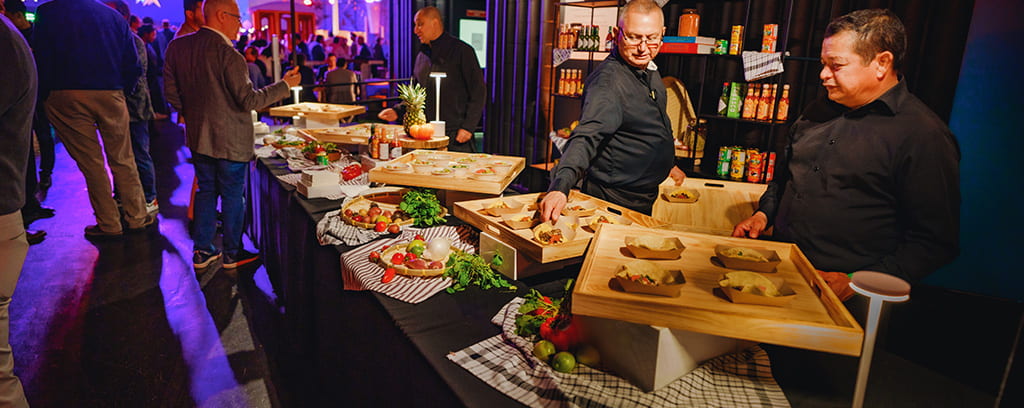
It can be easy to write catering considerations off as simple menu decisions.
For some guests, though, it is one of the first things they need to understand before they feel comfortable attending. Allergies and dietary restrictions are part of that. So are texture, smell, temperature, unfamiliar ingredients, and the simple question of whether there will be something they can actually eat.
One simple way to address this is to offer guests a chance to share their needs early on. The initial event registration form should give guests a clear place to share dietary needs, allergies, sensory food considerations, and substitution requests ahead of time. While you may not be able to accommodate every request, planners and catering teams can do much better when they know about those needs before service begins.
The same goes for substitutions. If alternate meals are available, the process should be clear. A guest should not have to pull a server aside, explain a personal need in front of a table, and hope there is a backup option somewhere in the kitchen.
For receptions, the answer is usually less complicated. A few familiar menu options can sit alongside the more creative options. Menus can be labeled clearly (including listing typical allergy concerns). Water should be easy to find throughout the event. Non-alcoholic drinks should also feel like real choices instead of the default soda tucked behind the bar.
Food and beverage should help people settle into the experience. When the options are clear, flexible, and easy to navigate, guests have one less thing to solve while they are trying to participate.
Make Networking Easier to Step Into
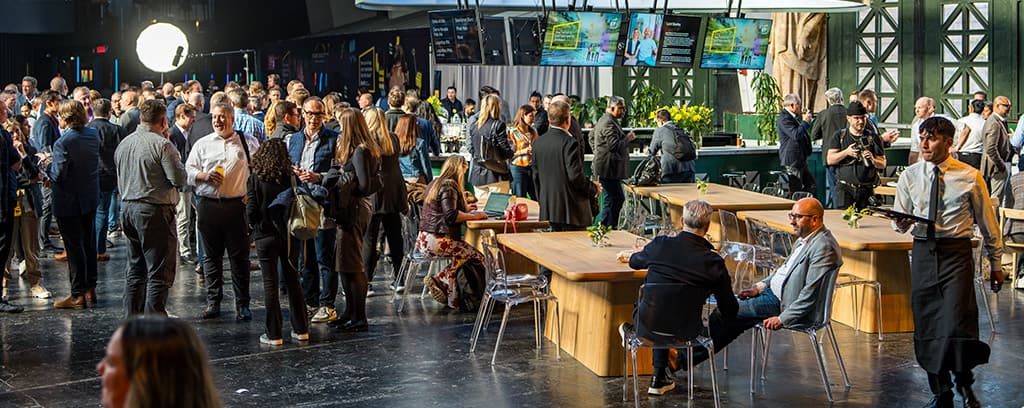
Networking is often planned as if it will take care of itself.
Open the doors. Turn on the music. Add a bar. Let people mingle.
That works for some guests. For others, it can be the hardest part of the event.
A standard reception can carry a lot of unwritten rules. When do you approach a group? How do you enter a conversation without interrupting? How long do you stay? How do you leave? What if the room is too loud to follow what people are saying?
For neurodivergent guests, guests with anxiety, or anyone who finds unstructured social settings draining, those worries can be major deterrents to participation.
Thankfully, the fix does not have to feel forced. In fact, the best version often just feels like better hosting.
Give people easier ways into conversation. A seated lounge can make a chat feel less exposed than standing in the middle of a crowd. A topic-based table gives guests a reason to approach. A hosted introduction can take the pressure off the first move. A demo, activity, or shared experience can give people something to respond to besides small talk.
Volume matters here too. If every networking area sits directly inside the loudest part of the reception, guests who struggle with sound or social processing may have nowhere to go without leaving the event. A quieter conversation area nearby can make a big difference.
Choose a Space That Gives Guests More Options
Venue choice can quietly decide how much flexibility an event actually has.
If the layout options are limited, planners have fewer chances to create a more comfortable, accessible experience for different kinds of guests. The venue does not need to be perfect. It just needs to give the plan more room to breathe.
A good space can make it easier to build in places to decompress, routes that feel clear, areas where conversation is easier, and pockets of calm near the main activity. Those choices should not feel like a separate track for certain guests. They should feel like part of the event itself.
For a neurodivergent guest, that difference can be especially meaningful. Stepping away for five minutes should not mean missing the event completely. Finding a quieter place to talk should not mean leaving the reception. Sitting down should not mean disappearing from the social part of the night.
That is why venue choice belongs in this conversation early. Neuroinclusive planning gets harder when the space gives you no flexibility to work with.
NPU’s corporate event venues are often used for events that need several experiences to work together in one space, from receptions and seated programs to product launches, activations, and full-company gatherings. That same flexibility can support neuroinclusive planning when it gives guests more than one way to move through the event.
Spaces like The Mint and Palace of Fine Arts each offer different possibilities for scale, separation, circulation, and reset space.
The strongest venue choice is not only the one that fits the guest count. It is the one that gives planners enough control to make the experience work for more people.
Better Events Make Room for More People
This is by no means meant to be a complete guide on all things neuroinclusive, but to give a better idea on how to start better planning your events with these concepts and attendees in mind.
Neuroinclusive event design is not about making events quieter, smaller, or less exciting.
It is about giving more guests a fair shot at enjoying the experience.
Some people need clear information before they commit. Some need a lower-stimulation area. Some need captions. Some need seating. Some need fewer surprises. Some need a moment away from the room before they can come back and fully participate.
The strongest live events do not ask every guest to experience the room the same way. They create enough structure, clarity, and choice for people to find their place inside the experience.
If you are planning a corporate event, fundraiser, brand activation, or large-scale gathering, the venue can either limit those choices or help make them possible. Explore NPU’s iconic San Francisco event spaces, and let’s find a room that gives every guest a chance to be a part of the fun.
Neuroinclusive Events FAQ
-
What is neuroinclusive event design?
Neuroinclusive event design is the practice of planning events with different sensory, cognitive, and social needs in mind. It helps create events that are easier for more people to understand, navigate, and enjoy, including guests with autism, ADHD, sensory sensitivities, anxiety, dyslexia, PTSD, and other cognitive or neurological differences.
-
What details should planners share before an event to make it more neuroinclusive?
In addition to the standard event details like date, time, location, speakers, and agenda, planners should share information that helps guests understand the event environment. That can include venue layout, sound or lighting expectations, seating, food and beverage details, quiet spaces, accessibility supports, and any major transitions guests should know about ahead of time.
-
How can I make my events easier for neurodivergent guests to navigate?
Events become easier to navigate when guests can understand where to go, what happens next, and where they can find support without having to ask multiple people. Clear signage, simple maps, visible check-in areas, well-labeled spaces, thoughtful seating, and easy access to restrooms, food, water, and quieter areas can all reduce unnecessary stress.
-
Why are quiet spaces helpful at events?
Quiet spaces give guests with certain sensitivities a place to step away from sound, crowds, lighting, or social pressure without leaving the event completely. For neurodivergent guests or anyone feeling overwhelmed, a calmer area can make it easier to reset and return to the experience.
-
How does venue choice affect neuroinclusive event planning?
Venue choice affects how much flexibility planners have to support different guest needs. A venue with clear circulation, flexible layouts, seating options, quieter areas, and room to create different event zones can make neuroinclusive planning much easier. The right space gives guests more than one way to move through the event.